
_copy_6b59cfc2_90870a01.avif&w=1080&q=75)


My CPAP Hose Smells: Deep Cleaning and Prevention Tips
If your tubing has an odour, a consistent cpap hose cleaning routine will restore freshness and protect your therapy. Below you’ll find safe methods, quick-dry tricks, and when to replace parts like connectors and heated hoses.
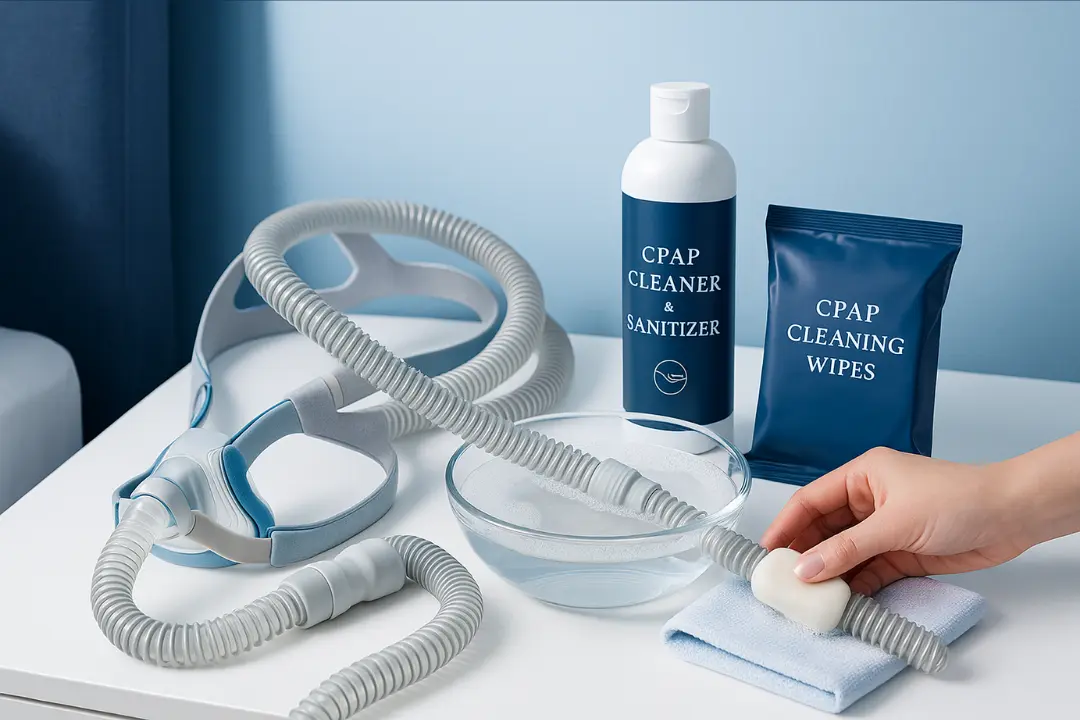
Why Hoses Smell (and How to Fix It)
Warm, humid air plus facial oils can leave residue inside tubing and the cpap hose connector, especially if gear isn’t dried fully. Odour is also common after colds, pet-dander exposure, or storing hoses while damp. The quickest fix is a thorough wash and complete dry, followed by a smart prevention routine.
Step-by-Step CPAP Hose Cleaning
- Detach mask, tubing, connectors, and humidifier chamber.
- Soak tubing for 15–20 minutes in warm water with mild dish soap. For stubborn smells, use a gentle 1:3 white vinegar to water solution (classic cpap vinegar cleaning), then rinse thoroughly.
- Rinse until water runs clear, then shake out excess.
- Air-dry completely (see drying hacks below) before reassembly.
Authoritative guidance from the Sleep Foundation recommends regular washing with mild soap and water and thorough air-drying to prevent residue and odour buildup. See their cleaning overview.
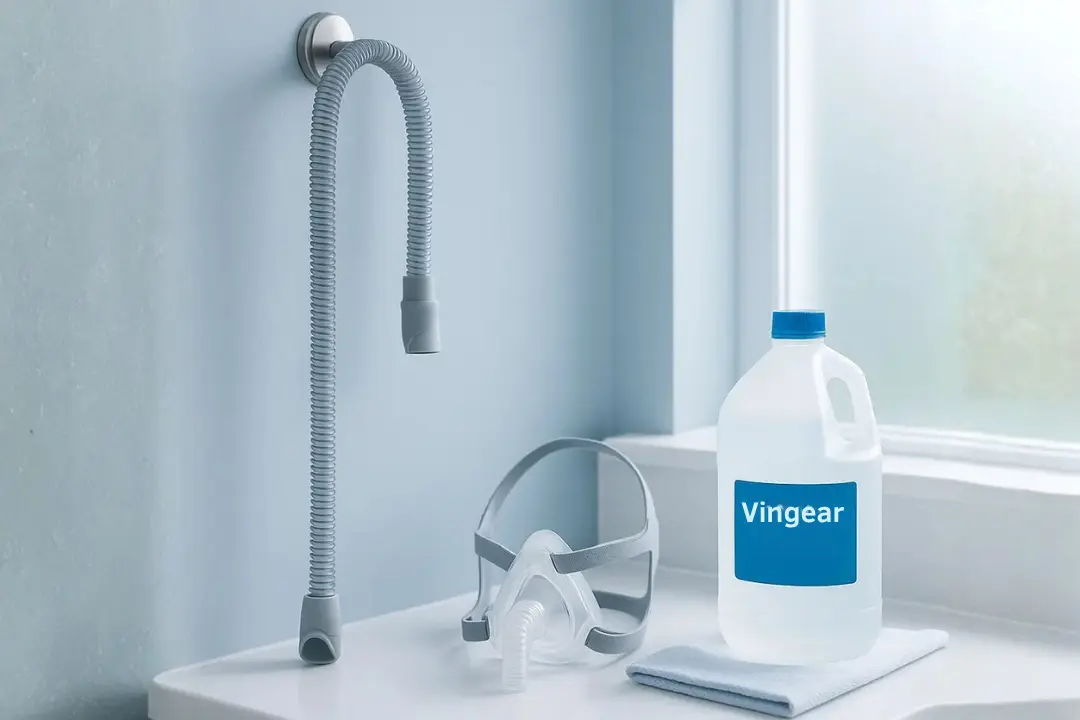
Drying & Odour Prevention
How to dry a CPAP hose quickly
- Hang the hose vertically over a shower rail so gravity drains moisture.
- Run a hairdryer on a cool setting across one end to move air (avoid heat).
- Use a cpap hose holder or cpap hose lift near a fan or bright window for faster airflow.
Everyday prevention
- Empty and refill the humidifier with fresh distilled water daily.
- Wipe silicone cushions and frames after use; explore mask options in our UK guide to first-night setup & comfort.
- Use a cpap hose cover for heated hose to reduce condensation (“rainout”).
When to Replace: Tubing, Connectors & Filters
Even well-maintained parts wear out. Plan cpap hose replacement every 3–6 months (sooner with stiffness, discolouration, or persistent odour). Inspect the cpap hose connector for cracks or looseness. For a full schedule across filters, masks, and chambers, see our CPAP filters replacement guide.
Helpful Accessories
Make upkeep simpler with our curated tools: the CPAP Cleaner & Sanitizer Bundle for regular washing, and CPAP Cleaning Wipes for quick daily wipe-downs. Explore more machines and masks at Sleepap.co.uk.
Conclusion
With a reliable wash-and-dry routine, targeted accessories, and timely replacements, cpap hose cleaning becomes quick and stress-free. Keep the airflow fresh, the seal comfortable, and your therapy consistent.
Frequently Asked Questions
How to dry a CPAP hose quickly?
Hang it vertically to drain and use cool airflow (fan or cool hairdryer). Avoid heat that can warp plastic.
What should I avoid when cleaning my CPAP?
Skip bleach, alcohol, scented detergents, and hot air on tubing. Don’t immerse the device base.
Do all CPAP hoses fit all machines?
Most standard 22 mm hoses are universal, but some heated systems and connectors are brand-specific—check your manual.
How do I stop a CPAP hose smelling?
Weekly wash, full dry, fresh distilled water daily, and replace tubing or connectors if odour persists.


